Join us on Friday January 16, 2026 at 7:30 pm at the VBAS Planetarium for our monthly member meeting. Admission is open to the public.
The science behind the structure of the universe
Benjamin Gibson will be our speaker for January. He is an astrophysicist at the Space Telescope Science Institute in Baltimore. He describes himself as a galactic archaeologist by using stars as a fossil history to trace the merger and evolution history of the galaxy.
Abstract: Join me on a tour of our night sky, and learn a bit of the hidden reality of the Milky Way and other galaxies across the cosmos! We’ll explore various parts of the electromagnetic spectrum and get an idea for many of the astronomical curiosities that we can’t see with our eyes. We’ll also see dozens of beautiful images from the Hubble and James Webb Space Telescopes, as well as many of the other top observatories across the world. Gain a new appreciation for the night sky and all the wonder that’s out there!
Join us on Friday December 19, 2025 at 7:30 pm at the VBAS Planetarium for our monthly member meeting. Admission is open to the public.
Apollo 8
In 1968 the Space Race was in full tilt. The Apollo program was on schedule to make it to the Moon before the end of the decade. However, reports held that the Russians were still ahead of NASA to get to the moon. To further complicate the issue, the Lunar Excursion Moduel (LEM), the vehicle necessary to land on the moon and that Apollo 8 was supposed to test in Earth orbit only, was not going to be ready for the scheduled test flight. In a classified meeting and with only a few months left to prepare, NASA charged Apollo 8 astronauts Frank Boreman, Jim Lovel, and Bill Anders with a new mission. They would no longer be testing the LEM in Earth orbit. They would go without the LEM and orbit the Moon before Christmas. As a result, these three astronauts would become the first people to leave Earth orbit and see the far side of the Moon. As part of their new mission, they were to photograph the surface of the Moon and find an adequate landing site for the upcoming Apollo 11 mission. But what they discovered and photographed on December 24th, on their fourth orbit around the moon, was nothing anyone anticipated or planned for.
Von Braun Astronomical Society will celebrate Astronomy Day on September 27th in person at Monte Sano State Park! Daytime events (between 1 – 5 pm) will include: mini-planetarium shows, Telescope tours, and Meteor radar demos. Evening events (between 7:30 – 9 pm) will include a keynote speech followed by a planetarium show.
Astronomy Day is FREE and open to the public!
7:30 PM Keynote talk by Mr. Rod Pyle
Silver Dust and Red Dreams: The Moon and Mars Circa 1950
Rod Pyle is a space author, journalist, and historian who has authored 20 books on space history, exploration and development for major publishers and NASA that have been released in ten languages. He is the Editor-in-Chief for the National Space Society’s quarterly print magazine Ad Astra and his articles have appeared in Space.com, LiveScience, Futurity, Huffington Post, Popular Science, the BBC’s Sky at Night, the World Economic Forum, Caltech’s E&S magazine, and WIRED. Rod has written extensively for NASA’s Jet Propulsion Laboratory and Caltech, including Jet Propulsion Laboratory’s annual Technology Highlights book. Rod co-authored and lectured for the Apollo Executive Leadership Program for NASA’s Johnson Space Center and The Conference Board. His recent books include Space 2.0 (with a foreword by Buzz Aldrin), Interplanetary Robots, Heroes of the Space Age, and First on the Moon (also with a foreword by Aldrin). Both First on the Moon and Rod’s previous Missions to the Moon (foreword by Gene Kranz) were national bestsellers and translated into multiple languages. He was recently commissioned by
the Library of Congress to write the preface for Neil Armstrong’s first words on the moon for its
accession to the permanent collection.
Rod has also produced or consulted on multiple space documentaries for The History Channel, Discovery Communications and National Geographic. He also worked in visual effects on Star Trek: Deep Space Nine and the Battlestar Galactica 2004 reboot, as well as sci-fi TV pilots. Rod was a consulting producer on the National Geographic documentaries Apollo 11 and The Real Stuff (based on Tom Wolfe's iconic book The Right Stuff).
Rod is an advisor for the Haughton-Mars Project (HMP), a NASA-affiliated Mars analog base in the High Arctic. Besides assisting with fieldwork there, he handles publicity and outreach for HMP and the Mars Institute with Dr. Pascal Lee.
Rod can be seen on The History Channel’s UnXplained: With William Shatner and is a regular guest on national radio with KFI/Los Angeles, WABC/New York, and WGN/Chicago as well as popular podcasts and radio in other markets. Rod co-hosts and produces the This Week in Space with Space.com’s Tariq Malik. He holds an MA from Stanford University and a BFA from
the Art Center College of Design, and lives in Alhambra, California.
Free Pizza & conversation at 7:00 pm. Meeting, including annual Elections, at 7:30 pm. The May Monthly meeting at our planetarium on Monte Sano will feature a chance for you to bring, swap, sell and buy gently used astronomy equipment and books. Contact Joe Kutner if you have any questions at vicepresident@vbas.org
Each Third Friday of the Month meeting starts with FREE pizza at 7:00, followed by the meeting at 7:30. In May we will have our annual board elections as well as the swap meet. Hope to see you there!
VBAS volunteers will be at the GigaParts Technology Superstore, 6123 University Dr, Huntsville on Saturday May 18 to provide advice and outreach from 9:30am on International Astronomy Day!
Telescope Clinic 10:00am -1:00pm.
Bring that telescope you just can’t get to work, or think you might have broken and we’ll take a look!
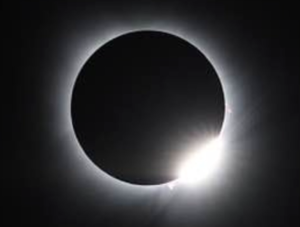
Eclipse Show and Tell 4:00pm-6:00pm. Sign up to share your images and stories – even if you got clouded out!
Presentations to attend from Choosing your First Telescope to Stargazing with Binoculars and Getting Started in Astrophotography!
Learn about Light Pollution and what you can do about it with volunteers from Starry Skies South.
GigaParts has a large range of telescopes, binoculars, eyepieces, books and more to browse as well as plenty of other fun technology. And a snack bar!
Everyone welcome. Bring your friends to introduce them to your favorite hobby! See you there.
This past week was the 37th Chaos Communication Congress, where a diverse audience of nerds gather to discuss technology and society. I observed from afar via their livestreams and recordings, and thoroughly enjoyed two space-centric talks. Both are linked below, I hope you find them as interesting!
The Extremely Large Telescope (ELT)
Two presenters, lk and panic, walk us through the construction and design considerations of the ELT, which will be a… big scope.
How Many Planets in Our Solar System? Glad You Asked!
Michael Büker gives a fascinating and well researched talk on the progress of planetary identification through the past several hundred years.
Von Braun Astronomical Society will celebrate Astronomy Day on September 23rd in person at Monte Sano State Park! Beginning at 1:00 p.m., events will include: solar viewing, mini-planetarium shows, rockets, vacuum-chamber demonstrations of what it’s like in space, and several other fun STEAM activities.
Free-admission planetarium shows will be hosted through the day. Show times will be 1:30pm, 2:30pm, 3:30pm, and 4:30pn.
7:30PM – Keynote Speaker:
MSFC Solar Sounding Rocket History, Present and Future!
Sounding rockets have been an important mechanism for testing new methods to observe the Sun for several decades and have played a significant role in advancing our understanding of our backyard Star. Some of the recent research efforts performed by our team at Marshall Space Flight Center include missions like the Hi-resolution Coronal Imager (Hi-C), the Chromospheric LAyer SpectroPolarimeter (CLASP) and the Marshall Grazing Incidence X-ray Spectrometer (MaGIXS). These instruments and the data collected from several successful ~5-minute suborbital flights have and continue to help us answer questions about solar atmospheric dynamics, magnetic field, heating and more. In this talk we will cover some important solar sounding rocket history highlights, results from some recent missions and some exciting missions on the horizon.
Genevieve Vigil
Genevieve Vigil earned a B.S. in Electrical Engineering from the University of Washington, Seattle, and a Ph.D. in EE from the University of Notre Dame in 2017. She turned toward Solar Physics as a NASA Post-Doctoral Fellow in the Solar Sounding Rocket group here at Marshal Space Flight Center from 2017-2020 and is currently a Civil Servant Researcher in the same group. Research interests include novel instruments, optics and detectors for high resolution imaging and spectroscopy, EUV and X-ray solar applications including solar atmosphere dynamics, magnetic field studies, and applications of machine learning.
Admission opens at 7:00pm; $5/adult, $3/student, 6 and under free.
Telescope viewing afterwards on clear nights
June 3 – The Magic Carpet Tour
We can use the star projector in the planetarium to pretend to fly anywhere on Earth – like a magic carpet! Gena Crook will demonstrate the motion of the stars across the sky at the equator, the north pole, and the southern hemisphere. We will also watch how the sun changes positions at these locations. You may be surprised if you haven’t actually been to the equator or the north pole in person! This program will put the star projector to work and allow us to see its unique educational capabilities.
Presented by Gena Crook
June 10 and 24 – The Universe is Trying to Kill You
Beyond the calamities that face us here on our planet, there are other forces in the universe that can do us in. Since our planet formed, it has been under constant threat of annihilation from both terrestrial and extraterrestrial influences. There are numerous terrestrial or natural events that can and do occur, such as hurricanes, volcanoes, and earthquakes, that have terrible outcomes. These disastrous terrestrial events pale in comparison to some of what lies out in the solar system and beyond that could cause our ultimate demise, such as giant meteors, comets, asteroids, exploding stars, and more. Join us as we take a somewhat lighthearted, tongue-in-cheek look at the dark shadow of doom that awaits us from within our solar system and the deep recesses of the universe.
Presented by Jared Cassidy, VBAS Planetarium Director
June 17 – Hairy Stars
To our forebears, comets were the oddest things. They didn’t look like the stars, they didn’t wander like the planets, and they were often seen following or preceding the Sun in the evening or morning sky. It’s no wonder that they were often associated with doom and change! The word ‘comet’ comes from an ancient Greek word meaning ‘long haired’ and in this presentation, we’ll look at what we know about these hairy stars from observations and space probes and how comets could be the key to exploring our galaxy!
Or copy and paste this URL: https://docs.google.com/document/d/1J6ysxclPQPsj1OJfS_jYItKWCCMZS38nRTD__4GuhtQ/edit?usp=sharing
Officer Elections in May
The following offices are up for election at our May 19th meeting (7:00 PM) and the nominating committee has found these candidates for office:
Vice President: Joe Kutner
Director of Facilities and Equipment: Tom Derington
Director of Education and Programs: Alexandra Hall
Treasurer: Eric Silkowski (incumbent)
Student Director: Greyden Kutner
Any member in good standing is eligible to be an officer. If you’re interested in running one of these positions, please contact Michael Buford at michaelcbuford[@]gmail.com
All planetarium shows begin at 7:30pm. Admission opens at 7:00pm. Telescope viewing afterwards on clear nights
March 4 – Huntsville’s Place in Space
As we prepare to go back to the Moon for the first time in over 50 years, the importance that Huntsville played both back then and right now is something to remember. Join Michael Buford for a look through the history of Huntsville’s amazing contributions in aviation, its massive importance during the Space Race, as well as Huntsville’s place in space now and in the future!
Written and presented by Michael Buford
March 11 and 18 – The Real Death Star: Neutron Stars…with a helping of Nuclear Pasta
George Lucas gave us the fictional Death Star, but did you know the universe is full of real death stars? Neutron Stars, remnants of supernovas, are the real thing. They can produce beams of energy sweeping through space that can sterilize an entire planet. When first discovered as pulsars they were even thought to be aliens! Join us as we explore these extreme stars where ordinary matter is crushed into a very unappetizing dish called “Nuclear Pasta.”
Presented by Eric Silkowski
March 25 – Spring Skies
Around the time of the Spring Equinox, the early evening sees the brilliant stars of the winter night sky setting, and a slightly less dazzling collection of constellations take their place. But our place in space at this time of year allows us a view into the deepest parts of the Universe to see many intriguing treasures. Indeed, this is the time of year that amateur astronomers plan marathons to try to observe as many as possible! In our show, we will explore the spring constellations, some of the objects that you can discover among them, and learn how the motion of the Earth around the Sun and the position of the Sun in our Milky Way galaxy combine to provide our fascinating Spring Skies.



 Telescope Clinic 10:00am -1:00pm.
 Eclipse Show and Tell 4:00pm-6:00pm.
  Presentations