Admission opens at 7:00pm; $5/adult, $3/student, 6 and under free.
Telescope viewing afterwards on clear nights.
August 1st – How’s the Weather on the Moon?
Yes indeed there is weather on the Moon. There is no significant lunar atmosphere so this environment poses significant hazards to our astronauts and lunar bases. Dr. Rob Suggs, retired NASA scientist, spent most of his career providing specifications of space environments to spacecraft designers and he contributed to the specifications in use by Artemis mission designers. Rob will describe lunar “weather” and what spacecraft designers need to do about it.
Presented by Rob Suggs
August 8th – The Life of a Star
Stars! Have you ever looked up into the night sky, and wondered: What are those bright colorful points of light doing? How did they come to be? What are they made of? How hot do they burn? Why do they come in different colors, and what does that mean? How might they end? And, do we come from the stars? We have answers. Join us on an exciting exploration of our stellar cosmos!
Presented by Cyril Bryan
August 15th – The Life of a Star
Stars! Have you ever looked up into the night sky, and wondered: What are those bright colorful points of light doing? How did they come to be? What are they made of? How hot do they burn? Why do they come in different colors, and what does that mean? How might they end? And, do we come from the stars? We have answers. Join us on an exciting exploration of our stellar cosmos!
Presented by Cyril Bryan
August 22nd – Celebrating Birds in the Sky
There are nine birds in the constellations of the night sky. Here in Alabama we can only see three of them. We’ll use our star projector to travel very, very far south and look for the southern birds. Perhaps you’ll learn something new about an exotic bird or two. Families welcome.
Presented by Gena Crook
August 29th – Bird Brained Astronomers
Birds can be remarkable astronomers despite their tiny brains! Some birds journey thousands of miles every year relying on the stars to guide them. We will discover how they do it, what other animals watch the stars, and how scientists know. Join us on a fantastic voyage as we use planetarium stars to guide us as we migrate south with birds.
Admission opens at 7:00pm; $5/adult, $3/student, 6 and under free.
Telescope viewing afterwards on clear nights.
July 4th – Red, White, and Blue Stars
Join us on a patriotic tour of American Astronomy and Space Exploration to celebrate the
USA’s 250th Birthday! From Benjamin Franklin to the Artemis II Astronauts, the USA has had a starring role in astronomical research and space exploration. We will explore the USA’s greatest achievements and many lesser-known facts as we marchacross space and time from 1776 Philadelphia to 2026 and interstellar space!
Presented by Eric Silkowski
July 11th – Astronaut Art
The wonders of thecosmos have inspired numerous works of art in all forms and throughout history. Many astronauts have turned to creative expression to convey their profound experiences in space. Through exposure to these pieces, we can achieve a glimpse at what the universe has to offer, from our unique and creative human perspective.
Presented by Julia von Hermann
July 18th – Sci Fi
Science fiction has always pushed the limits of imagination but how much of it could be real? We will dive into the science behind the best stories, from the alien biology of To Sleep in a Sea of Stars to the psychological and physical mysteries of Sphere, the survival driven physics of Project Hail Mary, and the visionary space travel of 2001: A Space Odyssey. We’ll break down what these stories get right, where they stretch the truth, and how real-world physics, biology, and engineering shape what’s possible.
Presented by Maggie Johnson
July 25th – How’s the Weather on the Moon?
Yes indeed there is weather on the Moon. There is no significant lunar atmosphere so this environment poses significant hazards to our astronauts and lunar bases. Dr. Rob Suggs, retired NASA scientist, spent most of his career providing specifications of space environments to spacecraft designers and he contributed to the specifications in use by Artemis mission designers. Rob will describe lunar “weather” and what spacecraft designers need to do about it.
Von Braun Astronomical Society will celebrate Astronomy Day on October 17th in person at Monte Sano State Park! Daytime events (between 1 – 5 pm) will include: mini-planetarium shows, Telescope tours, and Meteor radar demos. Evening events (between 7:30 – 9 pm) will include a keynote speech followed by a planetarium show.
Astronomy Day is FREE and open to the public!
7:30 PM Keynote talk by Dr. Heidi Haviland
Lunar Science from Artemis I, II & Commercially Landed Payloads
Dr. Haviland will highlight the science gained during the recent Artemis and commercial lander missions. Test flight Artemis I included several biology payloads and deployed ten Cube Satellites. The Artemis II crew participated in the first geological observations of the lunar farside. They were also able to observe space weather events, and six impact flashes from meteoroid impacts during their mission. The science campaign on Artemis II also included radiation detectors and human research. Four US commercial companies have attempted lunar landings in the past two years: Astrobotic Peregrine Mission 1, Intuitive Machines 1, 2, and Firefly Blue Ghost Mission 1. Over twenty science payloads were included in these missions. Dr. Haviland will highlight the science gained from these missions. Following, she will discuss the plans for science from the upcoming Artemis and Moon Base missions.
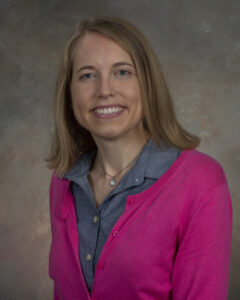
Dr. Heidi Haviland is a planetary scientist at NASA’s Marshall Space Flight Center. Originally from California, Dr. Haviland studied at Biola University and the University of Southern California earning two bachelor’s, and began her career designing and building spacecraft at Northrop Grumman Aerospace Systems. Following, Dr. Haviland then moved to Strasbourg, France, to study at the International Space University and obtained a master’s degree. Afterwards, Heidi studied at UC Berkeley’s Space Sciences Lab and completed her dissertation. Subsequently, she joined the Planetary Science Laboratory at Louisiana State University.
Heidi’s scientific research focuses on understanding planetary interiors using electromagnetic geophysical methods, neutron measurements, seismic normal modes, and the space plasma environment of airless bodies such as the Moon. She is the project scientist of the Neutron Measurements at the Lunar Surface (NMLS) instrument that will fly on Astrobotic’s Peregrine Mission one, and a science team member on the InSight mission. Heidi also leads an interdisciplinary research group focused on understanding the chemistry of the Moon through thermoelastic and petrological modeling. Heidi is the Project Scientist for the CLPS PRISM1a (CP-11) delivery which will investigate the Reiner Gamma surface swirl.
Admission opens at 7:00pm; $5/adult, $3/student, 6 and under free.
Telescope viewing afterwards on clear nights.
June 6th – Magic Carpet
Our star projector can help us pretend to fly anywhere on Earth – like a magic carpet! See the motion of the stars across the sky at the equator, north pole, and southern hemisphere. Watch how the sun changes positions at these locations. You may be surprised if you haven’t actually been to the equator or the north pole in person! We will put the star projector to work and use it to show its unique educational capabilities.
Presented by Gena Crook
June 13th – Birds of the Night
There are nine birds in the constellations of the night sky. Here in Alabama we can only see three of them. We’ll use our star projector to travel very, very far south and look for the “southern birds.” Perhaps you’ll learn something new about an exotic bird or two. Families welcome.
Presented by Gena Crook
June 20th – Summer Skies
Join us on a cosmic journey, navigating our summer skies: the stars, the constellations, many beautiful deep sky objects, and perhaps even some historical tales about them. We will also use our sky dome simulation projector to show where in the sky all these are located.
Admission opens at 7:00pm; $5/adult, $3/student, 6 and under free.
Telescope viewing afterwards on clear nights.
May 2nd – Birds of the Night
Monte Sano State Park is hosting a “Feather Fest” at the lodge today. Maybe you can attend that event. VBAS will participate by celebrating all things feathered in the night sky. There are birds everywhere at night and we’ll look for them on our planetarium dome. Families welcome.
Presented by Gena Crook
May 9th – Sci-Fi
Science fiction has always pushed the limits of imagination but how much of it could actually be real? We will dive into the science behind the most iconic and thought-provoking stories, from the alien biology of To Sleep in a Sea of Stars to the psychological and physical mysteries of Sphere, the survival driven physics of Project Hail Mary, and the visionary space travel of 2001: A Space Odyssey. We’ll break down what these stories get right, where they stretch the truth, and how real-world physics, biology, and engineering shape what’s possible. From alien life and artificial intelligence to relativistic travel and human survival in extreme environments, this show explores the line between fiction and reality and challenges you to decide for yourself: how far away is the
future we imagine?
Presented by Maggie Sexton
May 16th – Sci-Fi
Science fiction has always pushed the limits of imagination but how much of it could actually be real? We will dive into the science behind the most iconic and thought-provoking stories, from the alien biology of To Sleep in a Sea of Stars to the psychological and physical mysteries of Sphere, the survival driven physics of Project Hail Mary, and the visionary space travel of 2001: A Space Odyssey. We’ll break down what these stories get right, where they stretch the truth, and how real-world physics, biology, and engineering shape what’s possible. From alien life and artificial intelligence to relativistic travel and human survival in extreme environments, this show explores the line between fiction and reality and challenges you to decide for yourself: how far away is the
future we imagine?
Presented by Maggie Sexton
May 23rd – Magic Carpet
Our star projector can help us pretend to fly anywhere on Earth – like a magic carpet! See the motion of the stars across the sky at the equator, north pole, and southern hemisphere. Watch how the sun changes positions at these locations. You may be surprised if you haven’t actually been to
the equator or the north pole in person! We will put the star projector to work and use it to show its unique educational capabilities.
Presented by Gena Crook
May 30th – Summer Skies
Join us on a cosmic journey, navigating our summer skies: the stars, the constellations, many beautiful deep sky objects, and perhaps even some historical tales about them. We will also use our sky dome simulation projector to show where in the sky all these are located.
On Friday, April 10th, 2026 at 6:00pm, we’ll open our VBAS observing field all night to observers searching for Messier objects. Bring your scope to set up in our observing field! We have plenty of power outlets to plug your scope into.
Each Spring it’s possible to view all 110 Messier deep sky objects in a single night. A Messier Marathon is an event for amateur astronomers to attempt to observe as many of these objects as possible. It’s not a race or a contest, but more of an opportunity to get out and do what we love doing most in the company of other like-minded observers.
We will be exploring one of the biggest mysteries in the universe, most of it is made of something we can’t even see. It starts with the basics of gravity and motion to show how scientists understand the universe, then walks through how dark matter was discovered and the evidence that supports it. It also explains how we observe space, what dark matter might be, and how it differs from dark energy, which is driving the expansion of the universe.
Presented by Maggie Sexton
April 11th – World Space Day
In 1961, Yuri Gagarin became the first human to enter space! Join us for a presentation on the early days of the Space Race between the United States and the Soviet Union!
Presented by Haley Rice
April 18th – Dark Skies
What are dark skies and why do astronomers prize them? What is a Bortle? What can you do to preserve our dark sky heritage for the next generation? The answers to these and other questions await you in the planetarium tonight.
Presented by Beth Bero
April 25th – Vacation on Mercury
Vacationing on Mercury might not be a bad deal. There are a lot of positive aspects to be considered, including the long days and varied climates (sort of). We will talk about the previous results of missions to Mercury, some very recent discoveries, and the newest European Space Agency Mission just about to start sending new information back to earth.
Extrasolar Planets (Exoplanets) are planets that are outside our solar system. Since the discovery of first exoplanet in the early 90s, the field of exoplanet research expanded rapidly and resulted in the discovery of close to 6100 Exoplanets. Some of these orbit other stars and some are just freely floating in the vacuum of space. Studying these objects helps us understqnd our own solar system. Join us and learn all about these fascinating worlds.
Presented by Dr. Naveen Vetcha
March 14th – Auroras, Light Show in the Sky
The Northern and Southern Lights are a wonder to behold. Join us as we explore the causes of this fantastic phenomena.
Presented by Beth Bero
March 21st – Spring Skies
Our place in space at this time of year allows us a view into the deepest parts of the Universe to see many treasures. Amateur astronomers plan marathons in Spring to try to observe as many as possible! We will explore the spring constellations and some of the “treasures” that you can discover.
Presented by Alex Hall
March 28th – UPDATED – World Space Day!
In 1961, Yuri Gagarin became the first human to enter space! Join us for a presentation on the early days of the Space Race between the United States and the Soviet Union!